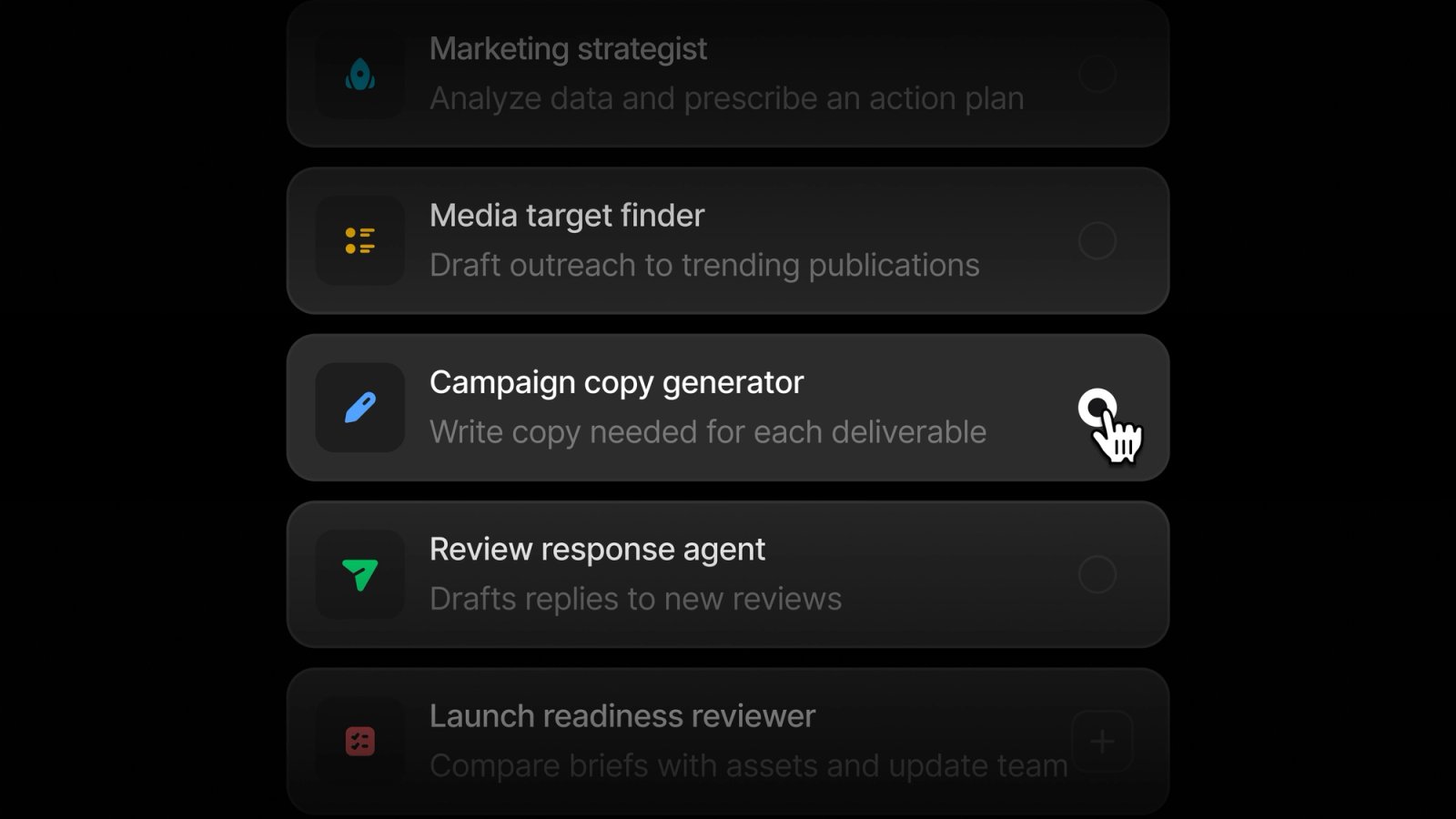
Between October 14 and October 16, 2026, three marketing AI vendors shipped agents that sit at three different distances from a human decision. Marklo proposes campaigns and waits for a marketer to ship them. Adobe Marketo Engage now runs callable agents inside Smart Campaign flows that rewrite and flag lead data before scoring and routing happen. Profound launched agents that start on their own triggers and describe the human in the loop as “a choice, not a blocker.” For a marketing team, the lead score, the campaign calendar, the weekly Slack brief, and the brand response now include steps nobody approved one at a time.
Principal Basil C. Puglisi wrote about this exact boundary in When AI Acts Between Approvals. His Checkpoint-Based Governance (CBG) work places the fracture point between two levels. At L1, AI recommends and a person approves each action, while at L2, AI acts inside set boundaries and a person reviews periodically. He argues that the shift arrives through vendor updates and integration defaults, and that no one redraws the governance line when the feature lands. This week’s launches put that argument inside the marketing stack, so the client question becomes which agents can act before a named human sees the result.
What Marklo, Adobe, and Profound shipped between October 14 and 16
Marklo announced a $5 million seed round led by Forerunner on October 14 and opened a public beta for brands running on Shopify. The company says the platform connects Shopify, Klaviyo, Attentive, Meta, Google, Slack, Canva, Figma and other tools. Every week it reviews sales, inventory, and the calendar, then delivers proposed campaigns with the reasoning and products behind each one. In Marklo’s words, “the marketer decides what to edit and ship.” Latico Leathers, per the release, planned a full month of marketing in one day, a job that had taken most of a week.
In its October 15 Marketo Engage update, Adobe said callable agents run as workflow steps inside Smart Campaigns and “evaluate or transform lead data” as leads move through a flow. Adobe lists five templates: job title standardization, company name normalization, phone number formatting, automated click activity flagging, and suspicious lead record detection.
The click flag targets corporate security tools that scan links before a recipient opens an email, which inflates lead scores. Teams can also deploy custom callable agents with their own rules, and the feature is in early access as part of Coworker for Marketo Engage, formerly Marketo AI.
Profound followed on October 16 with agents that run on a schedule or on dynamic triggers. Profound’s examples include ChatGPT visibility dropping more than 10 percent, a competitor publishing a post, or a message landing in a Slack channel. Agents can use Slack, Gmail, Google Drive and custom MCP connectors, and Profound’s AI Marketer can “proactively suggest and orchestrate Agents” when it spots repeatable work.
Where each launch lands on the L1 to L2 spectrum
Marklo, as described, operates at L1. The agent does the research and the drafting, and a marketer still decides what ships. Puglisi’s CBG work treats that as a real checkpoint when the reviewer holds the authority to accept, modify, or reject.
Marketo’s callable agents cross into L2 by design, and that’s fine for a phone number format. Puglisi’s post names the trigger plainly: when an AI tool starts categorizing, routing, prioritizing, or escalating work on its own analysis, the organization has crossed into L2. A job title rewrite changes the input a scoring model reads, and a suspicious-record flag can decide whether a real buyer ever reaches sales. Neither step waits for a person, and Adobe says these checks now happen “as soon as leads enter Marketo Engage.”
A phone format can run unattended for years without harm, yet a suppression rule decides whether a buyer ever gets a call.
Profound sits at L2 or beyond depending on how a team configures it. A trigger fires, the agent reasons through a judgment call, and it can post to Slack or use Gmail when a team grants those tools. Profound itself tells customers to test an agent after migrating a Workflow, “since an Agent reasons rather than follows nodes.” It also advises keeping a Workflow inside the agent when a step must run the same way every time. That guidance is honest, and it puts the governance decision on the customer.
Why Puglisi treats a cleaned lead record as a decision input
Puglisi separates two ideas that vendors often blend. In Responsible AI, the machine checks the machine with no human review. In AI Governance, a named human holds checkpoint authority with accept, modify, or reject. A callable agent that flags scanner clicks is Responsible AI, and it’s a useful one, because bot clicks distort scoring and nobody wants to clean them by hand.
Governance asks a different question about the same step. Who approved the rule that decides a lead looks suspicious, and who samples what the flag removed with the authority to reverse it? Puglisi’s diagnostic in the February post is direct: ask whether any AI system can take an action that no human explicitly approved beforehand. If yes, the audit trail has to capture those autonomous decisions with the same rigor it gives human-approved ones. Marketing teams rarely log a rewritten job title, and they should, because the rewrite feeds every downstream score.
What a marketing team should set up this quarter
Start with an inventory that marketing operations can finish in an afternoon. List every agent, flow step, and trigger that can run without a person in the moment, then sort them into two groups. One group changes format only, like phone numbers. The other changes a decision input: a score, a route, a suppression, a send, or a public reply.
For the second group, keep the original value beside the agent’s version and log which agent changed which field, when, and under which rule. Assign a named owner who accepts, modifies, or rejects the agent’s instructions before they go live and again after any vendor update. For triggered agents with write access to email or chat, decide in writing which tools stay read-only.
The measure Puglisi uses comes straight from his post: can a post-incident review reconstruct the full decision chain from prompt to consequence without gaps? Pick ten leads from last month, and if the team can’t show what each agent changed and why, the stack is running at L2 with L1 paperwork.
What to watch as these features leave early access
The approval line in marketing now moves with each release note, which turns a vendor changelog into a governance event that needs an owner and a date. Adobe’s callable agents are still in early access, Marklo is in public beta, and Profound just changed how its agents start, so each product will widen what runs between reviews.
Two open questions matter most for clients. Watch whether Adobe and Profound expose a field-level log of what their agents changed, and whether Marklo’s review step stays mandatory as the product scales past beta.
Clients who redraw their L1 and L2 boundary in the same week a vendor ships will keep a decision chain they can defend. Teams that wait tend to learn where the line moved from a lead that never reached sales.
Sources
- Bola, H. (2026, October 15). Make your Smart Campaigns smarter with agentic workflows. Adobe for Business Blog. https://business.adobe.com/blog/smart-campaigns-agentic-workflows
- Marklo. (2026, October 14). Marklo raises $5M to launch the agentic marketing platform for modern commerce [Press release]. GlobeNewswire. https://rss.globenewswire.com/news-release/2026/10/14/3380664/0/en/marklo-raises-5m-to-launch-the-agentic-marketing-platform-for-modern-commerce.html
- Puglisi, B. C. (2026, February 28). When AI acts between approvals: The gap everyone sees and no one has closed. basilpuglisi.com. https://basilpuglisi.com/when-ai-acts-between-approvals-the-gap-everyone-sees-and-no-one-has-closed/
- Traina, J., & Gomez, G. (2026, October 16). Introducing the next generation of Agents in Profound. Profound. https://www.tryprofound.com/blog/introducing-the-next-generation-of-marketing-agents
Questions readers ask
What did Adobe add to Marketo Engage Smart Campaigns in October 2026?
On October 15, 2026, Adobe announced callable agents that run as workflow steps inside Smart Campaigns to evaluate or transform lead data. Templates cover job title standardization, company name normalization, phone formatting, scanner click flagging, and suspicious lead detection. The feature is in early access through Coworker for Marketo Engage.
How do Profound’s new marketing agents decide when to run?
Profound’s October 16, 2026 release lets agents run on a schedule or on dynamic triggers, such as ChatGPT visibility dropping more than 10 percent, a competitor publishing a post, or a Slack message. Agents can use Slack, Gmail, Google Drive and custom MCP connectors, and the AI Marketer can suggest new agents.
What is the difference between L1 and L2 marketing AI?
In Basil C. Puglisi’s framing, L1 means AI recommends and a person approves each action. L2 means AI acts inside defined boundaries and a person reviews periodically. Marklo’s propose-and-approve model fits L1, while Marketo callable agents that rewrite lead data before scoring operate at L2 by design.
Is an AI agent that flags bot clicks Responsible AI or AI Governance?
Flagging scanner clicks is Responsible AI in Puglisi’s definition: a machine checking a machine with no human review. It becomes AI Governance when a named human approves the flagging rule, samples what it removes, and holds authority to accept, modify, or reject the agent’s instructions before and after vendor updates.
What should a marketing team log when agents edit lead data?
Keep the original value beside the agent’s version, and record which agent changed which field, when, and under which rule. The test from Puglisi’s CBG work is whether a post-incident review can reconstruct the full decision chain for any lead without gaps, from the first agent step to the final route.
#AIg
Leave a Reply