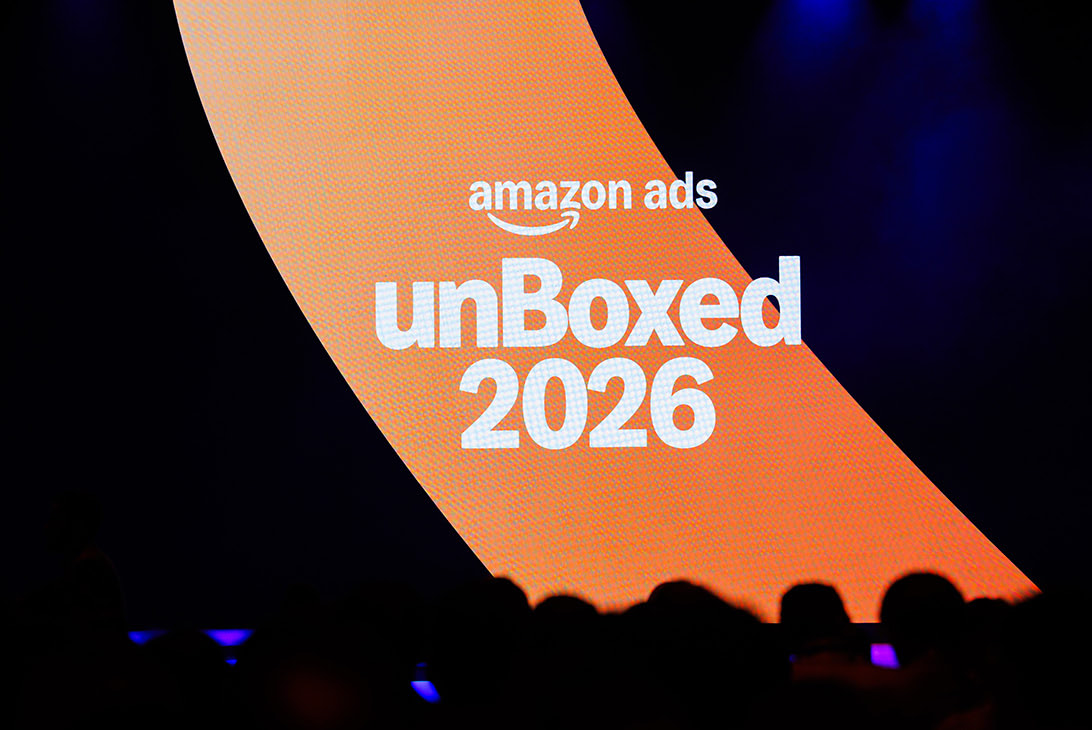
Principal Basil C. Puglisi reads agent-run advertising the way he reads any vendor claim: the platform’s number is a fact about the platform, and the advertiser still owes itself a KPI written before the budget moves. At unBoxed 2026 in San Francisco, Amazon renamed its unified buying workspace Amazon Ads Agent, bringing what was formerly the DSP and the Ads Console into one platform where advertisers can ask questions, take recommendations, or simply give instructions, according to Amazon’s September 30 recap, The 11 biggest takeaways from unBoxed 2026. Its new Full-Funnel Campaigns let an advertiser set a goal while AI handles the channel mix, creative, audiences, and optimization, and Amazon says beta testers saw 67% higher long-term return on ad spend and 29% lower cost to acquire new-to-brand customers.
Three days later, a different kind of announcement came from Google. Search Engine Land reported on October 2 that Google Ads is rolling out A/B testing for Performance Max asset groups, and Google’s help documentation describes the beta as a control set of existing assets compared against a treatment set, with traffic split between them and the tested asset group locked until the experiment ends. One platform is asking advertisers to hand more of the media decision to an agent, while the other is giving them a cleaner way to prove whether a creative change moved anything.
Factics is the method Puglisi uses to keep that tension honest. Every fact must lead to a tactic, and every tactic must leave evidence, with the measurement defined before the action so the result can fail. The fact here is that Amazon’s lift figures come from Amazon’s own internal data and carry an “individual results may vary” note. The tactic is a launch rule: no agent-run campaign goes live without a written KPI tied to a baseline and a holdout or split design that the advertiser controls. He made the same case in How AI Disrupted the Traditional Marketing Funnel in October 2025, arguing that incrementality testing replaces last-click attribution once AI reads the journey in real time, and that measurement moves out of marketing and into governance.
Amazon Ads Agent puts the media plan inside one conversation
Amazon’s September 29 DVA+ launch note takes Display, Video, and Audio campaign creation down to four steps: choose an objective, select products or a brand URL, review AI-generated creatives, and set a budget. From there, DVA+ handles targeting, inventory selection, format allocation, bidding, creative generation, and continuous optimization. Advanced settings keep manual targeting, deals, frequency caps, and bid strategies for teams that want them, and Amazon says domain-level reporting shows where every impression served by publisher, format, and geography. DVA+ sits in extended closed beta in the United States, with open beta expected in late October 2026, general availability across 35 markets targeted for Q1 2027, and API access targeted for the same quarter.
The recap adds the parts that matter for a marketing operations lead. Amazon Ads Agent puts nearly 1,000 metrics behind natural-language questions, and its generative creative tools now sit inside the same conversation, where Amazon reports up to 71% more product coverage and up to 15% sales growth for advertisers using them. For a client team, the useful reading is a division of labor. When the agent picks the audience and sets the bid, someone on the team still owns the objective and the stopping rule. Puglisi’s working position is that the person who signs the budget also signs the KPI before launch, and the choice between DVA+ and its advanced settings belongs in the written brief with a named owner.
Platform lift figures stay hypotheses until a client test confirms them
The DVA+ page cites up to 68% improvement in cost per acquisition from Brand+ and Performance+, up to 34% higher return on ad spend for sellers, and nearly 2x higher return on ad spend for advertisers who engage with Campaign Guidance. Each figure is footnoted to Amazon internal data, and each footnote carries the note that individual results may vary. Those footnotes are candid about what the numbers are, because they describe results across Amazon’s own advertiser population, measured with Amazon’s own attribution. The Campaign Guidance comparison sets engagers against non-engagers, which can reflect who chooses to engage as much as what the tool does.
Factics turns that into a measurable intent. Before a client moves budget into Full-Funnel Campaigns or DVA+, the team writes the primary KPI against the current baseline, such as new-to-brand customers or cost per acquisition, and reserves a geographic or audience holdout for the comparison window where the platform allows one. If the agent-run campaign beats the holdout on the pre-written KPI across that window, it earns more budget. If it doesn’t, the evidence gets re-verified first and the tactic changes second, which is the loop the Factics page describes.
Google’s Performance Max A/B test gives the creative side a cleaner proof
Google’s help page lays out the mechanics. Assets in an asset group split into a control group, a treatment group, and common assets that keep serving to all traffic, and advertisers define the traffic split between control and treatment. Once the experiment starts, nobody can edit, add, or remove assets in that group until it ends, and Google recommends a minimum of four to six weeks. Only one asset group can be tested per experiment. This builds on Google’s April 17, 2026 announcement, Scale results with new asset experiments in Performance Max, which added an optional second success metric and put conversion lift studies and experiments on the same Experiments page. Search Engine Land’s write-up is careful on the limit: the test won’t make Performance Max fully transparent, though it does give advertisers a more controlled answer on whether a creative change made a difference.
This is the shape of test Puglisi wants on the Amazon side as well, with one variable held against a control and edits frozen until the window closes. A team running both platforms can hold the same standard on each, so a creative refresh in Performance Max and a move into DVA+ both pass through a written hypothesis and a defined end date before anyone reports a win.
What a marketing lead should put in the brief before the agent gets the budget
Amazon is also building for agents that work without a person at the keyboard. Its Amazon Ads MCP Server (Lite) starts with three core tools that let outside AI agents discover and call more capabilities, and the AMC Expert Tool turns a plain-language request into an Amazon Marketing Cloud SQL query. That points toward agents briefing agents, and the brief has to carry the human decision. Puglisi’s version fits on one page: the objective and the KPI written before launch, the baseline and the holdout, the owner who decides between the simple mode and advanced settings, and the date the result gets read. A campaign that cannot fill that page stays in test.
Amazon’s tools can compress creative work that used to take weeks, and Google’s tests can tell a team whether a new asset set earned its place. Both gains hold only when the team decided in advance what success would look like. Factics reduces that to three questions on its own page, and an agent-run media plan has to answer the last one, what happened because we did it, with a number the client defined first.
Sources
- Miller, M. (2026, September 30). The 11 biggest takeaways from unBoxed 2026. Amazon Ads. https://advertising.amazon.com/library/news/unboxed-2026-news-announcements
- Amazon Ads. (2026, September 29). Reach new audiences using DVA+, bringing the power of programmatic advertising to everyone. https://advertising.amazon.com/resources/whats-new/dva-plus-display-video-audio-campaigns
- Adegbola, A. (2026, October 2). Google Ads brings A/B testing to Performance Max asset groups. Search Engine Land. https://searchengineland.com/google-ads-brings-a-b-testing-to-performance-max-asset-groups-493229
- Google. (n.d.). About Performance Max optimization experiments: A/B testing assets (Beta). Google Ads Help. https://support.google.com/google-ads/answer/16807329?hl=en
- Google. (2026, April 17). Scale results with new asset experiments in Performance Max. Google Ads. https://business.google.com/us/accelerate/announcements/scale-results-with-new-asset-experiments-in-performance-max/
Questions readers ask
What is Amazon Ads Agent?
Amazon Ads Agent is the unified buying platform Amazon announced at unBoxed 2026, bringing together what was formerly the Amazon DSP and Ads Console. Sponsored ads, Full-Funnel Campaigns, and DVA+ run inside it, and a conversational AI experience in expanded closed beta lets advertisers ask questions, review recommendations, or give instructions in plain language.
What do Full-Funnel Campaigns and DVA+ automate?
Full-Funnel Campaigns let an advertiser set a goal while AI manages the channel mix, creative, audiences, and optimization. DVA+ reduces Display, Video, and Audio campaign setup to four steps and then handles targeting, inventory, format allocation, bidding, and creative generation, with advanced settings available for teams that want manual control.
When will DVA+ be broadly available?
Amazon’s September 29, 2026 launch note says DVA+ is in extended closed beta in the United States, with open beta expected in late October 2026. International expansion is planned through Q4 2026, and general availability across 35 markets is targeted for Q1 2027, the same quarter Amazon targets for API access.
How does Google’s Performance Max A/B test for assets work?
Advertisers pick one asset group, assign existing assets to a control arm and new or existing assets to a treatment arm, and set a traffic split. Common assets keep serving to all traffic, the tested asset group is locked while the experiment runs, and Google recommends running each test for at least four to six weeks.
How does Factics apply to agent-run ad buying?
Factics requires a verified fact, an assignable tactic, and a KPI written before the action. For agent-run campaigns, the platform’s lift figures count as facts about the platform’s own measurement, so the client writes its own KPI and baseline, keeps a holdout or split design, and moves budget only when the campaign beats that comparison.
What should a marketing brief include before an AI agent manages ad spend?
The brief should state the objective and the KPI before launch, record the baseline and the holdout, name the owner who chooses between the simple mode and advanced settings, and set the date the result gets read. A campaign that cannot meet those terms stays in test until it can.
#AIg
Leave a Reply