On October 28, 2026, Triton Digital announced what it describes as an audio-industry first. According to the company’s release, AI agents carried a media buy from request and negotiation through booking in the ad server “with no manual intervention required to move the deal from brief to booking.” An agent working for the brand Otrium, with Draft Digital as the agency, matched audio products to the campaign brief and settled terms with the seller side. The campaign is now live with the publisher Talpa Media, and Triton says the exchange took minutes instead of days.
On October 27, Smartly and Alter Agents published a survey of 500 U.S. and U.K. marketers in which 77% said they are comfortable with AI in advertising when a human has final approval. The survey asked about AI in advertising generally, and agent-to-agent buying puts that condition to a harder test. When no person touches the individual deal, a marketing team has to decide where the final approval sits. Basil C. Puglisi’s answer is that it sits in the brief and its guardrails, and a brand has to treat those documents as the approval itself.
Puglisi has tracked automation in media buying for more than a decade. In August 2015, writing about Instagram opening its advertising API to marketing partners, he described the change this way: “Before this, advertising was limited and manual. Now, it’s automated, data-rich, and customizable.” That shift moved the day-to-day running and testing of ads into software. The Triton transaction automates the negotiation as well, a stage of media buying that IAB Tech Lab says has historically been handled “largely through human and manual workflows.”
Triton says the review moved earlier in the process
Triton’s release is direct about where the people went. “Before the agent could act,” the company says, its teams and the agencies’ teams “set the terms, pricing guardrails, and data, privacy, and campaign-validation standards,” and every booking is checked against those standards before a campaign goes live. The release then makes its central claim, that agent-to-agent execution “moves the review earlier, into how the system is designed, rather than into a manual step in each individual deal.” Philip Sonneveldt, head of growth at Otrium, stated the brand’s condition plainly: “Speed only matters to us if the guardrails hold, and this transaction showed both.”
The announcement describes a single transaction and gives no budget, price or performance figures for it. Triton reports that one deal ran from brief to booking without manual intervention, and the harder test will come when the same guardrails govern hundreds of deals a month across many publishers.
The buying standard is still open for comment
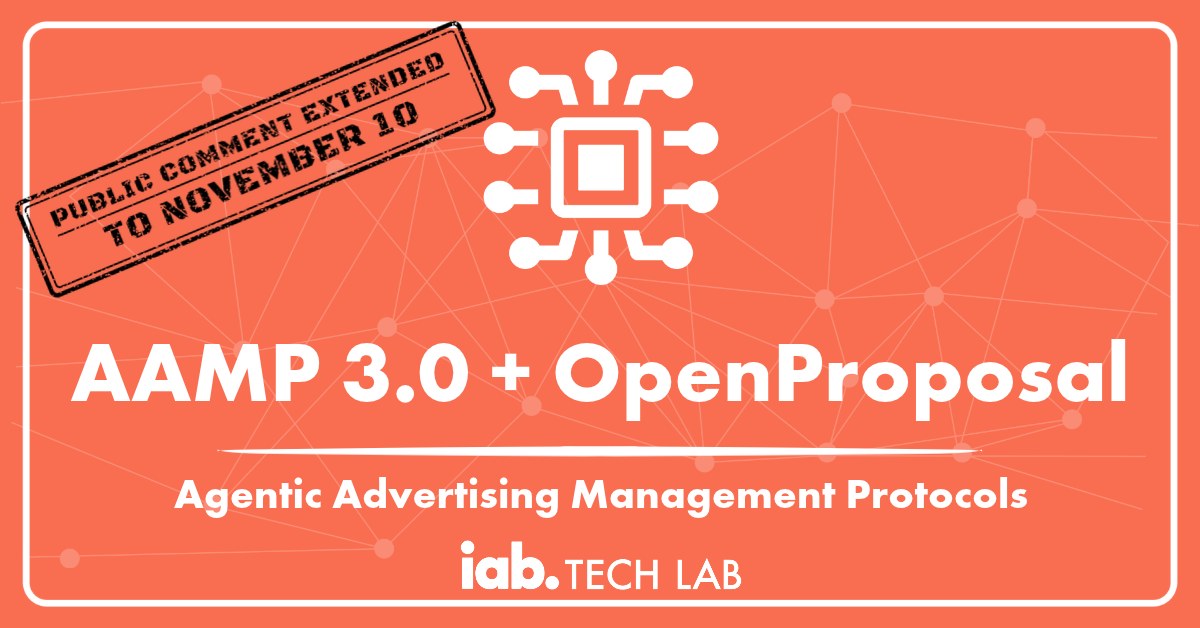
The industry standard for this kind of buying is still in draft. In September, IAB Tech Lab introduced AAMP 3.0, the latest release of its Agentic Advertising Management Protocols, with a specification called OpenProposal. It gives buyer and seller agents a standard way to move from a request for proposal (RFP) to a buy commitment, and IAB Tech Lab has extended public comment to November 10, 2026. The release says the agent software development kits “further harden deterministic guardrails governing pricing, ad packages, orders and media buy details.” The group’s AAMP information sheet describes configurable guardrails that keep automation “controlled with Human-in-the-Loop Approval Gates,” and a final stage where performance data flows back “to verify results against initial campaign goals.” Brands and agencies that expect to buy this way in 2027 can use the comment window to ask for the approval record they will later need.
The guardrail check is Responsible AI, and the signature is AI Governance
Puglisi draws a firm line between two kinds of control. When software checks every booking against pricing and privacy rules, a machine is checking a machine, and he classifies that as Responsible AI. Those automated checks are what make agent speed workable, and the brand still has to define which exceptions go to a named person. AI Governance starts where a named human holds the decision and the record shows it. An October analysis on basilpuglisi.com, Agent Security Tools Can Stop an Action. Whose Name Is on the Yes?, applied his vocabulary to agent approvals and set out a test that carries straight into media buying: “An action that waits is governed. An action that proceeds after a timeout is automation with a delay.” The same piece argued that a real checkpoint needs a modify path alongside approve and deny.
In the Triton transaction, Triton’s and the agencies’ teams set the guardrails before the agent acted, and the release doesn’t say who on the brand side approved them. Puglisi’s position is that advance approval of the guardrails is a legitimate place for a human final approval to sit, provided a named person on the brand side signed the terms and knows what they allow. Whether surveyed marketers would count that advance sign-off as final approval is a separate question the survey didn’t ask.
How Puglisi would set up approval for agent-bought media
The first step turns the brief and its guardrails into a signed document. Before a buying agent goes to market, a named media owner on the brand side signs the price ceiling and the total spend the agent may commit, along with the inventory, brand-safety, data and privacy rules. Any change to those terms needs a new signature, and the agency should be able to produce the signed version for any live campaign.
The second step stops the deals the guardrails don’t cover. A request that falls outside the signed terms, or that the rules cannot classify, waits in a queue for the named owner. That person accepts it, modifies it or rejects it under Checkpoint-Based Governance, Puglisi’s model in which a named human holds binding decision points. A deal that books itself after the owner fails to respond counts as automation under Puglisi’s test, so the setup shouldn’t allow it.
The third step puts a person at the reconciliation. AAMP already plans for a stage that checks results against the original goals, and Puglisi would add a human sign-off at that point. The owner who signed the brief compares what the agents booked with the authorized terms, and where contracts permit, the brand makes that review a condition of payment.
A brand can track the setup with two numbers. The first is the share of agent-booked spend that the signing owner reconciles before payment, and the target is all of it. The second is the share of deals booked within a set margin of the price ceiling, grouped by comparable inventory. When agents keep landing near the limit, the owner should check those prices against the market and decide whether the ceiling needs to change before the next flight.
What to watch before agent buying reaches the media plan
Triton’s deal is one transaction, and IAB Tech Lab’s comment period closes on November 10. Two developments are worth watching before 2027 plans lock: whether the final AAMP text keeps human approval gates as a defined part of the workflow, and whether agencies that sell agent buying will show clients the signed guardrails behind each deal. Before a brand authorizes agent-led buying, it should ask its agency to name who signs the spending limits and to show how exceptions are recorded, because in agent-to-agent buying the human approval lives in the brief.
Sources
- Alter Agents. (2026, October 27). Alter Agents and Smartly release new research showing 99% of marketers use AI, with human creativity and oversight key to its future [Press release]. PR Newswire. https://www.prnewswire.com/news-releases/alter-agents-and-smartly-release-new-research-showing-99-of-marketers-use-ai-with-human-creativity-and-oversight-key-to-its-future-302920296.html
- IAB Tech Lab. (2026, September 22). IAB Tech Lab introduces AAMP 3.0 to standardize the RFP-to-buy process for agentic advertising [Press release]. https://iabtechlab.com/press-releases/iab-tech-lab-introduces-aamp-3-0-with-openproposal/
- IAB Tech Lab. (2026). AAMP (Agentic Advertising Management Protocols) info sheet. https://iabtechlab.com/wp-content/uploads/2026/10/AAMP-Info-Sheet-October-2026.pdf
- Puglisi, B. C. (2015, August 31). Instagram automation arrives: What marketers gain when ads go programmatic. basilpuglisi.com. https://basilpuglisi.com/instagram-automation-arrives-what-marketers-gain-when-ads-go-programmatic/
- HAIA Agents. (2026, October 23). Agent security tools can stop an action. Whose name is on the yes? basilpuglisi.com. https://basilpuglisi.com/ai-agent-security-human-approval-record-aig/
- Triton Digital. (2026, October 28). Triton Digital launches first Seller Agent for audio, completing first agentic audio transaction with Otrium, Draft Digital and Talpa Media [Press release]. https://www.tritondigital.com/resources/audio-insights-and-news/triton-digital-launches-first-seller-agent-for-audio-completing-first-agentic-audio-transaction-with-otrium-draft-digital-and-talpa-media
Questions readers ask
What did Triton Digital announce on October 28, 2026?
Triton Digital said its new Seller Agent completed an audio media buy in which AI agents handled the request, negotiation and booking for the brand Otrium, with Draft Digital as agency and Talpa Media as publisher. People set the pricing guardrails and the data, privacy and campaign-validation standards before the agents acted.
Do marketers want human approval over AI in advertising?
In a Smartly and Alter Agents survey of 500 U.S. and U.K. marketers, released October 27, 2026, 77% said they are comfortable with AI in advertising when a human has final approval. In the same study, 81% said they would trust a brand more if it disclosed AI-generated advertising.
What is IAB Tech Lab’s AAMP 3.0 OpenProposal?
OpenProposal is a draft specification within IAB Tech Lab’s Agentic Advertising Management Protocols. It gives buyer and seller agents a standard way to move from a request for proposal to a buy commitment, and IAB Tech Lab has extended public comment on it to November 10, 2026.
Who approves a media deal when AI agents negotiate it?
In agent-to-agent buying, approval moves to the brief and the guardrails set before the agents act. Basil C. Puglisi advises that a named brand owner sign those terms, decide any deal outside them as accept, modify or reject, and reconcile agent-booked spend before payment.
How can a brand measure control over agent-bought media?
Track the share of agent-booked spend that the signing owner reconciles before payment, with a target of all of it. Also track how often deals land within a set margin of the price ceiling for comparable inventory, because repeated near-limit prices are a signal to check the ceiling against the market.
#AIg
Leave a Reply