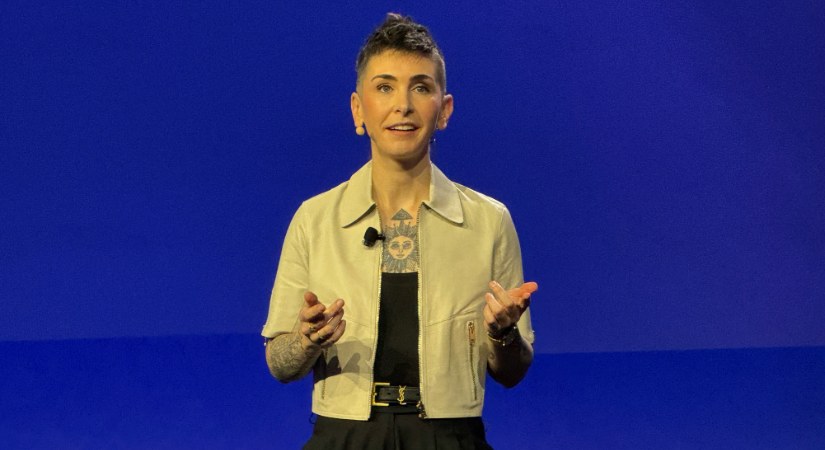
Gartner opened its HR Symposium in Orlando on October 26, 2026, with a number that should change how a finance committee reads its next AI request. Three-quarters of board members expect AI to pay off through productivity and cost savings, yet 97% of organizations can’t reach their desired cost savings through productivity alone, according to the company’s release. CV Viverito, a senior director analyst in the Gartner HR practice, added that “Thirty-eight percent of companies are over budget on AI and 85% report they are planning to spend even more next year.” Boards expect savings while a large share of companies report overruns, and Basil C. Puglisi traces much of that gap to the business case.
Puglisi made the argument in March 2026, when he worked through a library of research in What 34 Reports Actually Told Us About AI. His synthesis warned that production AI needs monitoring, feedback loops, model versioning, incident response and change management “at a scale that most organizations don’t build into their initial business cases.” This week’s figures fit that warning. Costs a pilot never carried tend to surface once the work scales, and then the approved case stops matching the bill. His position for clients is that an AI business case has to be priced again at production volume, and a named person has to decide whether it still stands.
Gartner and Cloudera find AI costs outrunning the plans behind them
Gartner framed the problem bluntly. “Ultimately, organizations will not generate cost savings from AI at this point,” Viverito said in the release, pointing companies toward new capabilities and growth. The Day 1 keynote highlights carried a sharper line, “AI will never be as cheap as it is today,” set beside the finding that almost 40% of companies are over budget on AI. The same summary says organizations that use redesign to change the cost of work are more than twice as likely to exceed their cost goals. Gartner’s release gives sample sizes for some of its other findings but not for the board and budget figures. A client should treat those percentages as directional.
Cloudera’s report, released the same day, points to token consumption as one driver of the cost pressure. The State of Enterprise AI 2026 rests on a Wakefield Research survey of 1,500 global IT leaders fielded in September. It found that 89% of respondents have already limited or redesigned AI use cases because of rising token consumption. Fifty-five percent reported faster-than-expected growth in governance and compliance costs, and 45% have moved AI workloads in response to higher or more volatile costs. Cloudera commissioned the survey and sells a hybrid data and AI platform, and that interest belongs in any client discussion of these figures.
A bank CFO says the benefits haven’t reached the earnings yet
The same tension showed up on an earnings call. On JPMorganChase’s third-quarter call on October 13, an analyst asked where AI’s benefits appeared in the results. Chief Financial Officer Jeremy Barnum agreed that “the benefits aren’t observable in our current quarterly earnings,” and added that “some of those benefits are going to be offset with token costs.” He also said he was reluctant to spend energy quantifying the gains because the effort takes people away from the work. A mid-size company rarely has that much room to wait, because each AI line usually has to justify itself within one budget cycle.
Pilot economics hide the costs that arrive at scale
A pilot usually runs on a small team and a modest prompt volume. Usage usually grows once the tool reaches every desk, and agents that loop through several model calls per task can grow it faster. Review time tends to rise with output, and a regulated client also has more compliance work to document. Those lines are often too small to notice in the pilot. That is how a business case built on pilot numbers can look sound on approval day and then fail its first full-year review.
The 34-report synthesis gave a structure for avoiding that trap: “a specific process, a defined metric, a baseline measurement, a deployment, and a post-deployment measurement.” That sequence only works when the cost side gets measured as carefully as the benefit side. A case that counts hours saved and leaves out tokens and review hours reports just the benefit half of the ledger.
How Puglisi would re-price an AI business case before it scales
The first step is a unit cost at production volume. For each AI use case moving out of pilot, the team estimates the full cost per completed task at expected volume. That figure includes model and token charges and the human review minutes each output needs, plus the governance and compliance work the use case carries. The comparison point is the cost of the same completed task before AI, taken from the baseline the pilot should already have recorded.
The second step is a cost band, and the band needs an owner. A named executive signs the business case with an approved range for cost per completed task. When monthly spend pushes the unit cost outside that band, the case comes back to that person under Checkpoint-Based Governance, and the decision is recorded as accept, modify or reject. The CBG framework treats those as the only three outcomes, and modify covers practical moves such as routing routine requests to a cheaper model or capping agent loops. On the same call, JPMorganChase chairman and CEO Jamie Dimon said model-routing tools are coming, adding, “You don’t need the most expensive thing for every query you have.”
The third step separates what the machine can watch from what a person must decide. Spending alerts and automated usage caps are machine checking machine, which Puglisi classifies as Responsible AI, and every client should keep them running. Whether a use case is still worth its new price is a business judgment, and that call belongs to the person who signed the case.
A client can track this with two numbers. The first is cost per completed task against the pre-AI baseline, reported monthly for each use case in production. The second is the share of total AI spend that maps to a use case with a signed, current business case, and the target is all of it. Spend that maps to no signed case is a governance gap, and it should trigger a review before the next invoice arrives.
Renewals in the 2027 budget cycle carry the pilot’s assumptions forward
Gartner reports that 85% of companies plan to spend more on AI next year, and any renewal that skips a fresh unit-cost estimate carries the pilot’s assumptions into that larger budget. A business case approved at pilot volume is a different decision at production volume, and the person who signed the first one should be the person who signs the second. Two developments are worth watching before those renewals close: whether vendors change token pricing as demand grows, and whether the full Cloudera report shows which kinds of use cases were redesigned most often.
Sources
- Cloudera. (2026, October 26). The AI scale trap: Why 89% of enterprises are forced to redesign AI use cases amid rising costs [Press release]. https://www.cloudera.com/about/news-and-blogs/press-releases/2026-10-26-the-ai-scale-trap-why-89-of-enterprises-are-forced-to-redesign-ai-use-cases-amid-rising-costs.html
- Gartner. (2026, October 26). Gartner HR research finds 77% of board members expect AI to deliver productivity and cost savings, yet just 3% of organizations exceed cost savings goals via productivity [Press release]. https://www.gartner.com/en/newsroom/press-releases/2026-10-26-gartner-hr-research-finds-77-percent-of-board-members-expect-ai-to-deliver-productivity-and-cost-savings-yet-just-3-percent-of-organizations-exceed-cost-savings-goals-via-productivity
- Gartner. (2026, October 26). Gartner HR Symposium/Xpo, North America: Day 1 highlights [Press release]. https://www.gartner.com/en/newsroom/press-releases/2026-10-26-gartner-hr-symposium-xpo-orlando-day-1-highlights
- JPMorganChase. (2026, October 13). 3Q26 financial results earnings call transcript. https://www.jpmorganchase.com/content/dam/jpmc/jpmorgan-chase-and-co/investor-relations/documents/quarterly-earnings/2026/3rd-quarter/3q26-earnings-transcript.pdf
- Puglisi, B. C. (2026, March 4). What 34 reports actually told us about AI: The truth behind the hype, the proof, and the path forward. basilpuglisi.com. https://basilpuglisi.com/what-34-reports-actually-told-us-about-ai-the-truth-behind-the-hype-the-proof-and-the-path-forward/
- Puglisi, B. C. (n.d.). Checkpoint-Based Governance: Presence is not authority. basilpuglisi.com. https://basilpuglisi.com/cbg/
Questions readers ask
What did Gartner find about AI cost savings in October 2026?
Gartner said on October 26, 2026, that three-quarters of board members expect AI to deliver productivity and cost savings, while 97% of organizations cannot reach desired cost savings through productivity alone. An analyst added that 38% of companies are over budget on AI and 85% plan to spend more next year.
Why are enterprise AI costs rising faster than expected?
Usage often grows once a tool leaves the pilot, and agents can make several model calls per task. Cloudera’s 2026 survey of 1,500 IT leaders found 89% had limited or redesigned AI use cases because of rising token consumption, and 55% saw governance and compliance costs grow faster than expected.
Do AI productivity gains show up in company earnings yet?
Not always. On its October 13, 2026 earnings call, JPMorganChase’s CFO said AI benefits aren’t observable in the bank’s current quarterly earnings and that some benefits will be offset by token costs. He described the use cases as promising while saying the gains have yet to show in quarterly results.
How should a company price an AI use case before scaling it?
Estimate the full cost per completed task at expected production volume, including model and token charges, human review minutes and governance or compliance work. Compare it with the cost of the same task before AI, using the baseline recorded during the pilot, and set an approved cost band before rollout.
What happens when an AI use case goes over its approved cost?
Under Basil C. Puglisi’s Checkpoint-Based Governance, the case returns to the named executive who signed it, and that person records a decision to accept, modify or reject. Modify can mean routing routine work to a cheaper model or capping agent loops, with the reason written down.
#AIg
Leave a Reply